

Songlines
Using Story to Stay Found
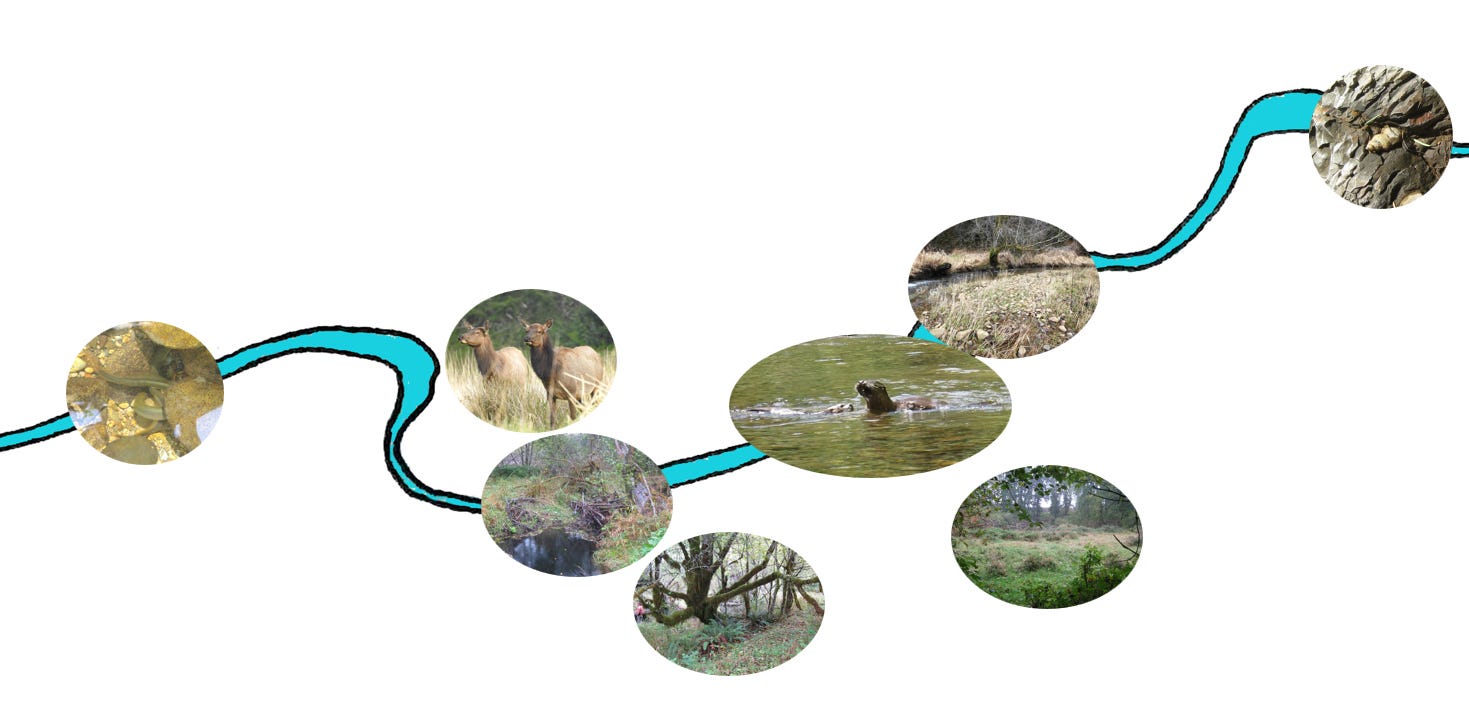
There is an Aboriginal concept called a “songline” that describes a type of oral history that combines phenological, meteorological, astronomical, topographical, cultural, and historical information. Gary Snyder, a writer and lifelong student of the land, got to spend some time with Pitjantjara and Pintubi people in Australia several decades ago. He describes his impression of songlines in his essay, Good, Wild, Sacred: “There was a time when you journeyed on foot over hundreds of miles, walking fast and often traveling at night, traveling nightlong and napping in the acacia shade during the day, and stories were told to you as you went. In your travels with an older person you were given a map you could memorize full of lore and song, and also practical information. Off by yourself you could sing those songs to bring yourself back. And you could maybe travel to a place that you’d never been, steering only by songs you had learned.”
As a person of another culture, especially one so transient and devoid of a generational connection to place, it is impossible for me to fully grasp the true nature of Aboriginal songlines. I am able to appreciate it metaphorically, though, and I use the term to describe a truncated version of its original meaning.
If we pull out a single thread from the cord that is Songlines, we might say that in Australia, the Aboriginals do not use drawn maps to find their way around. Every place has a story tied to it. As they travel from place to place, the Aboriginals tell the stories, or sing the songs, associated with each particular location. They always know where they are, because of the songs.
Our topic this month is mapping. This week, I’d like you to consider what it might look like to orient yourself to the landscape based on your personal connection to the places through which you travel. I believe that, as a species, this comes naturally to us. You may already do this, perhaps subconsciously.
